Charter Commission Kick-off: Cheesecake and Undercurrents

First came the cheesecake: Brooklyn BP Marty Markowitz greeted the 2010 NYC Charter Revision Commission members at their first public meeting, at the NYC College of Technology in downtown Brooklyn, and gifted each one with Junior’s cheesecake.

Then commission chair Matthew Goldstein explained the purpose of the meeting to an audience of about 75, and invited his colleagues to introduce themselves. When the intros progressed across the crowded stage to commission member Carlo Scissura, Scissura leaned back and deferred to colleague Hope Cohen, who had been forced to sit behind him when the dais got too crowded for all 15 commission members. Goldstein, a mathematician by training, joked about this as being an example of “a packing problem.” It was not his last mathematical allusion. Our take: The commission’s March 3rd appointment date didn’t leave enough time to hire the staff members who could prepare for a public meeting scheduled only two weeks later. Continue reading


Power to the Beeps?

Stephen Fiala. Photo from the SI Advance

On the morning of the 2010 NYC Charter Revision Commission’s first public meeting, Tom Wrobleski’s  coverage is ahead of the game. Wrobleski, writing for the Staten Island Advance, says that commission member Stephen Fiala, Richmond County Clerk, intends to explore the possibility of giving more power to the borough presidents.

Although Fiala is skeptical of his prospects for success, we think an opportunity for greater BP power exists. As we commented to Wrobleski, power comes when one elected official needs the support of another to get his initiatives through. Continue reading

What Happens When a Charter School Arrives

Do charter schools raise educational standards? The schools’ proponents say that charters educate more effectively than traditional public schools, and even those that don’t, still create a competitive environment in which traditional public schools are “incentivized” to improve their own teaching methods. Can this logic be disputed?

The pro-charter school argument ignores that charters can hurt overall educational progress by undermining nearby traditional public schools. Charters’ aggressive marketing efforts can force TPSs to expand their own publicity campaigns, diverting money and time that otherwise would have gone to support instruction. A charter’s arrival in a neighborhood also can demoralize a public school’s leadership and parents, who view the interloper as a competitor for space and dollar resources and community support. But it is outside the schoolhouse walls that charters may do their most lasting damage, if they create or exacerbate social divisions in the community. How this plays out depends on the neighborhood, and the quality of its traditional public school. Continue reading

Charter Revision Commission Announces First Public Meeting

Mayor Bloomberg’s 2010 charter revision commission has announced its first public meeting, to be held on Thursday, March 18 at the NYC College of Technology in Brooklyn.

The meeting announcement is posted on the charter commission’s web site. It specifically states that the meeting will not be a public hearing. No public hearing dates are yet available on the web site, which currently features bios of the 2010 commission members and an extensive archive of documents from previous commissions.

Government 311: How to Improve Complaint Submission

It’s not the first time that 311 has been used to harass neighbors, but it may be the most egregious. Jim Dwyer, writing in the Metropolitan Section of Sunday’s NY Times, tells of a rash of phony 311 complaints that, Dwyer says, “has put thousands of homeowners in Queens under a state of bureaucratic siege.”

“From September to December, more than 3,000 complaints of illegal [residential] conversions were filed in three Queens neighborhoods — Whitestone, Flushing, and Malba.” The result: Buildings department inspectors repeatedly seeking entry into homes maliciously identified by anonymous complainants. Continue reading

Charter Schools: The Power of Marketing

Wednesday’s New York Times ran a front-page story on some Harlem public schools that are responding to pressure from charters by aggressively marketing themselves. Such marketing typically includes school tours for prospective parents, augmented by postcards and brochures, with most campaigns [amounting] “to less than $500, raised by parents and teachers….”

The Times story tells how prospective parents touring P.S. 125 with its principal, Rafaela Espinal, showed appreciation for the low number of students they saw in each classroom and the school’s impressive physical amenities, which include a rare swimming pool. But some parents, according to the Times, still weighed sending their child elsewhere. Continue reading

The Bronx? Yes, Thonks!

Two Event Notices from 250+ Friends
(with apologies to Ogden Nash)

Continue reading

The Bloomberg/Citizens Union Charter Agenda

Mayor Bloomberg’s 2010 charter revision partnership with the Citizens Union showed its face Monday in the form of a comprehensive charter overview by CU panelist Douglas Muzzio, a professor at Baruch College. Here’s some of what Muzzio wrote, with our translations in italics:

Describing the current city charter, Muzzio called it “a large document (currently 356 pages), packed with organizational minutiae, much of which belongs in the Administrative Code.” The Bloomberg commission — with the help of the Citizens Union — will call for “streamlining” the charter by shifting some of its provisions to the Administrative Code. This will make it easier for the mayor and the Council to change those provisions later on, without the public scrutiny that would occur if they remained in the charter.

Continue reading

Charter Revision: Whose Rules?

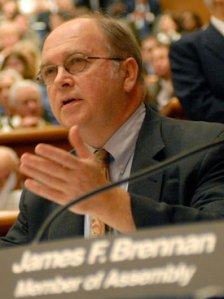
Frustration grew to a boil near the end of a March 5 public hearing by the NYS Assembly’s Standing Committee on Cities at 250 Broadway. The committee, chaired by Assemblyman James Brennan (44AD), was hearing comment on proposed bills to amend the State’s Municipal Home Rule Law, which governs how New York’s cities may revise their charters.
Just two days earlier, Mayor Michael Bloomberg had announced the creation of a 2010 charter revision commission for New York City. To the surprise of many, the Bloomberg announcement singled out the Citizens Union, a century-old independent “good-government” reform group, to partner with the charter commission to improve public outreach. Continue reading

Why Charter Revision Matters: Our Core Principles

Some of our readers may wonder why we repeatedly worry about giving the mayor any additional powers. It’s because we believe that our current system of government tends to select city-wide leaders who support the interests of Manhattan’s finance and real estate industries — to the detriment of other boroughs and other industries. As important as finance and real estate are for the city’s financial solvency (right now, they’re still crucial), they don’t tend to create middle-income jobs, which can leave us in a vulnerable place in an economic downturn, as in 2008-2009. Simply put, we’ve placed too many of our eggs in one or two baskets. Continue reading