Tag Archives: Michael R. Bloomberg

Charter Revision Alumni Weigh In

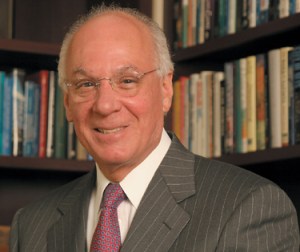
F. A. O. Schwarz, Jr. photo courtesy praxagora.com

You wouldn’t expect that a panel discussion by former charter revision commission chairs would be enlightening or amusing, but it was both. Monday’s webcast panel at Baruch College featured former commission chairs Richard Ravitch (1986-88), F.A.O. Schwarz, Jr. (1989), Randy Mastro ( 1999, 2001), Frank Macchiarola (2003), and Ester Fuchs (2005). Current commission chair Matthew Goldstein moderated; several of his colleagues participated in the questioning.

The senior panelists agreed that Mayor Bloomberg’s 2010 commission has no choice but to address term limits (although they couldn’t agree on how), that New York’s strong mayoralty must continue, and that the borough presidents’ offices should be strengthened. What they didn’t agree on — term limits, their impact on minority voting, the fate of the public advocate, and non-partisan elections — provided some lively back-and-forth. Continue reading

311: A Political Tool

The News and the Post report that Mayor Michael Bloomberg suggested to parishioners at Brooklyn’s Christian Cultural Center that they should use 311 to help them lobby to raise the state’s charter school cap. “Just pick up the phone, call 311, ask for the name and the phone number of your state senator or state assemblyman, call them up and say, ‘This is an outrage!'”

Strictly speaking, anyone can call 311 to learn an elected official’s phone number. But the mayor’s suggestion that 311 should be used in support of a specific political initiative — one that he favors — skirts the edge of propriety — and, maybe, the law. Continue reading

Charter Revision: Just Like Jury Duty

Stephen J. Fiala

One surprise from Monday morning’s webcast meeting of the 2010 NYC Charter Revision Commission at the Tweed Courthouse was that Staten Island commission member Stephen J. Fiala emerged as a hard-liner with respect to the commission’s tight schedule. Here’s what happened:

Chairman Matthew Goldstein asked executive director Lorna Goodman to describe the five “issues forums” that the commission will convene starting later this month. These, she said, will center on land use; term limits, voter participation, including consideration of non-partisan elections; “balance of powers,” including the roles of the borough presidents and the community boards; and fiscal integrity.

Goldstein then turned to Fiala to read the resolution by which the commission would formally adopt the commission’s calendar, including another round of public hearings to be held during the summer. After those, he said, the commission will have to make a “pivotal decision” prior to September 2 as to  “whether to cull a subset of issues” to be presented on November’s ballot. Continue reading

Community Board Budgets to be Restored

Mayor Bloomberg’s Fiscal Year 2011 Executive Budget calls for the restoration of community board funding to $198,895.

The restoration comes after almost $60,000 in reductions proposed by the mayor’s Office of Management and Budget earlier this year.

Those proposed reductions prompted many community board members to argue for “baseline budgeting” at April’s charter revision commission public hearings. Many boards also reached out for help to their borough presidents and City Council members. Continue reading

Stephen Goldsmith: What to Expect?

Stephen Goldsmith

Unlike some previous Bloomberg appointees, Stephen Goldsmith, Bloomberg’s newly-announced deputy mayor and chief operating officer, comes with a well-documented track record one that won’t necessarily please NYC’s municipal unions.

Goldsmith’s appointment last week drew the attention of several media outlets in Indianapolis, where he served as mayor between 1992 and 1999. There, he earned a reputation for privatizing city services and cutting costs, which he parlayed into a senior domestic policy advisor’s position with George W. Bush’s campaign. Among the services delivered by private companies during Goldsmith’s Indianapolis stint were the city’s car-towing operations, golf courses, sewer-bill collections, and document copying. Continue reading

Updates around the city

Brighton Beach Avenue

Just to remind us of the continuing battle between neighborhood preservationists and developers in NYC, Sunday’s NY Times Real Estate section’s “Living In” profile of Brighton Beach noted the beachfront neighborhood’s continuing high-rise development:

“In 2008, responding to community alarm, the city’s Planning Department proposed a 54-block rezoning of the area that would have capped the heights of many structures at four stories. But developers’ opposition proved overwhelming and last June the city withdrew the plan.”

Elsewhere, the city’s 59 community boards — favorite forums for neighborhood preservationists — continue to face severe cuts to their budgets. Our colleague at Bronx Board 12, Father Richard F. Gorman, writes that the latest reduction leaves each community board with a budget lower than the take-home salary of a single Bloomberg commissioner. Despite the infinitesimal impact on the city’s budget, the mayor has not rescinded the cuts.

Last Thursday, the Staten Island Advance reported on NYS Assembly Speaker Sheldon Silver’s address before a Staten Island economic development conference: “The City Charter Revision Commission ‘should grant borough presidents and community boards more of a say over how services are rendered,’ Silver said, adding, ’if there is a pothole on Hylan Boulevard, the borough president ought to be able to get it filled.’” The Advance did not say whether Silver acknowledged that the State legislature has the power to convene a NYC charter revision commission of its own. Continue reading

Charter Revision: What to Expect in May

Kingsbridge Armory

The populist image conveyed by the charter revision commission’s April public hearings will fade in May when invited “consultants, ” commission members, and staff publicly dissect the legalistic, technical, and detailed language of the City Charter at a series of “issue forums.” What are some of the technical issues the experts will examine?

According to commission chair Matthew Goldstein, one prominent goal of this year’s commission will be to find ways to improve “efficiency” in city government. Almost certainly, this will involve identifying procedural and structural changes that can create a more development-friendly environment and help future mayors control key land use decisions. Such changes would seek to prevent recurrence of events such as Mayor Bloomberg’s recent loss to the City Council on the Kingsbridge Armory Mall project in The Bronx, where a dispute over wage rates caused the Council to reject the initiative. Continue reading

April’s Charter Revision Hearings: What Did They Accomplish?

Matthew Goldstein

A couple of days ago we posted a story about how the Daily News tried to convince its readers that mayoral aide Howard Wolfson was wrong when he told NY1 that Mike Bloomberg will dictate the agenda for the 2010 NYC Charter Revision Commission.

The News was protecting commission chair Matthew Goldstein and his colleagues — who have steadfastly insisted that the commission will act independently — from potential accusations that they are dupes or liars. It also was trying to bolster public confidence that public testimony matters at the commission’s hearings. Does it? The answer is “yes, but maybe not the way you think.” Continue reading

The (old) news behind the news is that the News is behind the Mayor

Howard Wolfson photo: Newsbusters.org

As we have observed before, the Daily News is playing a crucial public relations role for the mayor during the charter revision process. Today, the News is doing damage control, trying to convince readers that Mike Bloomberg isn’t going to pull the charter revision commission’s strings, despite what his chief political strategist said Tuesday. Read today’s DN story by Adam Lisberg and see if you agree.

The headline, “Charter chairman to commissioners: Ignore City Hall and do what’s right,” says it all: Commission chairman Matthew Goldstein will protect the group from mayoral control. Next comes a memo Goldstein sent yesterday to his colleagues “as a reply to Mayor Bloomberg’s deputy Howard Wolfson,” who undermined the commission’s hope that the public would view it as independent when he “said Tuesday night on NY1 that the commission probably wouldn’t recommend eliminating borough presidents or the public advocate, but ‘certainly we will have the term limits issue on the ballot.'” Continue reading

Too Much Decentralization?

Pedro Espada Jr.

As our “About” entry indicates, in our other life we chair one of Brooklyn’s community boards. We’re believers in the utility of these 50-member local advisory bodies. We’ve seen them protect neighborhoods against City Hall excesses, assist elected officials when they needed to communicate with local residents, help agency people to coordinate local service delivery, and prevent wasteful municipal spending on projects that won’t work.

So our usual reaction when people from outside the community boards want to change the way boards operate is to ask whether they know what they’re talking about. We’re not completely sure that Huffington Post “writer, musician and New Yorker” Will Schwartz has the whole picture. Some of his assumptions about boards having “untrained, un-vetted leaders” and lacking “economists, public health officials, lawyers, hospital administrators, and other trained professionals” are without merit. But he knows enough about city government to understand that a recent charter revision proposal from controversial State Senator Pedro Espada is completely off the mark. Continue reading