Tag Archives: Matthew Goldstein

Charter Revision Alumni Weigh In

F. A. O. Schwarz, Jr. photo courtesy praxagora.com

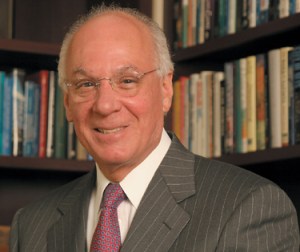
You wouldn’t expect that a panel discussion by former charter revision commission chairs would be enlightening or amusing, but it was both. Monday’s webcast panel at Baruch College featured former commission chairs Richard Ravitch (1986-88), F.A.O. Schwarz, Jr. (1989), Randy Mastro ( 1999, 2001), Frank Macchiarola (2003), and Ester Fuchs (2005). Current commission chair Matthew Goldstein moderated; several of his colleagues participated in the questioning.

The senior panelists agreed that Mayor Bloomberg’s 2010 commission has no choice but to address term limits (although they couldn’t agree on how), that New York’s strong mayoralty must continue, and that the borough presidents’ offices should be strengthened. What they didn’t agree on — term limits, their impact on minority voting, the fate of the public advocate, and non-partisan elections — provided some lively back-and-forth. Continue reading
Charter Revision Commission Undermines Community Board Review of 2010 Proposals

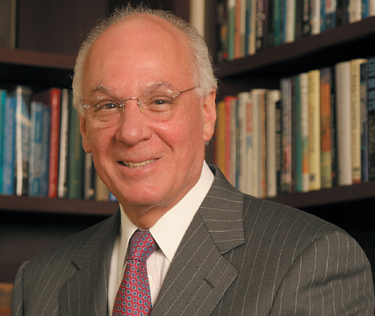
Matthew Goldstein

The “issues forums” schedule just announced by the New York City Charter Revision Commission will limit public review of any proposed changes to ULURP, the city’s land use process.

This schedule needs to be scrapped.

The commission’s “issues forums,” calendared between May 25 and June 24, will generate charter proposals that won’t even be made public until July — when most New Yorkers have started their vacations, and community boards have gone on summer break. Continue reading

Charter Revision: Just Like Jury Duty

Stephen J. Fiala

One surprise from Monday morning’s webcast meeting of the 2010 NYC Charter Revision Commission at the Tweed Courthouse was that Staten Island commission member Stephen J. Fiala emerged as a hard-liner with respect to the commission’s tight schedule. Here’s what happened:

Chairman Matthew Goldstein asked executive director Lorna Goodman to describe the five “issues forums” that the commission will convene starting later this month. These, she said, will center on land use; term limits, voter participation, including consideration of non-partisan elections; “balance of powers,” including the roles of the borough presidents and the community boards; and fiscal integrity.

Goldstein then turned to Fiala to read the resolution by which the commission would formally adopt the commission’s calendar, including another round of public hearings to be held during the summer. After those, he said, the commission will have to make a “pivotal decision” prior to September 2 as to  “whether to cull a subset of issues” to be presented on November’s ballot. Continue reading

Charter Revision: What to Expect in May

Kingsbridge Armory

The populist image conveyed by the charter revision commission’s April public hearings will fade in May when invited “consultants, ” commission members, and staff publicly dissect the legalistic, technical, and detailed language of the City Charter at a series of “issue forums.” What are some of the technical issues the experts will examine?

According to commission chair Matthew Goldstein, one prominent goal of this year’s commission will be to find ways to improve “efficiency” in city government. Almost certainly, this will involve identifying procedural and structural changes that can create a more development-friendly environment and help future mayors control key land use decisions. Such changes would seek to prevent recurrence of events such as Mayor Bloomberg’s recent loss to the City Council on the Kingsbridge Armory Mall project in The Bronx, where a dispute over wage rates caused the Council to reject the initiative. Continue reading

April’s Charter Revision Hearings: What Did They Accomplish?

Matthew Goldstein

A couple of days ago we posted a story about how the Daily News tried to convince its readers that mayoral aide Howard Wolfson was wrong when he told NY1 that Mike Bloomberg will dictate the agenda for the 2010 NYC Charter Revision Commission.

The News was protecting commission chair Matthew Goldstein and his colleagues — who have steadfastly insisted that the commission will act independently — from potential accusations that they are dupes or liars. It also was trying to bolster public confidence that public testimony matters at the commission’s hearings. Does it? The answer is “yes, but maybe not the way you think.” Continue reading

The (old) news behind the news is that the News is behind the Mayor

Howard Wolfson photo: Newsbusters.org

As we have observed before, the Daily News is playing a crucial public relations role for the mayor during the charter revision process. Today, the News is doing damage control, trying to convince readers that Mike Bloomberg isn’t going to pull the charter revision commission’s strings, despite what his chief political strategist said Tuesday. Read today’s DN story by Adam Lisberg and see if you agree.

The headline, “Charter chairman to commissioners: Ignore City Hall and do what’s right,” says it all: Commission chairman Matthew Goldstein will protect the group from mayoral control. Next comes a memo Goldstein sent yesterday to his colleagues “as a reply to Mayor Bloomberg’s deputy Howard Wolfson,” who undermined the commission’s hope that the public would view it as independent when he “said Tuesday night on NY1 that the commission probably wouldn’t recommend eliminating borough presidents or the public advocate, but ‘certainly we will have the term limits issue on the ballot.'” Continue reading

Monday’s charter commission hearing: deceptively full

Bronx Councilman G. Oliver Koppell, who spoke out against term limits

By Jonathan Berk

At the end of Monday’s Charter Revision Commission public hearing at Hostos Community College in The Bronx, commission chair Matthew Goldstein thanked the public for their “robust” participation over the almost-three-hour session. Indeed, the hearing was full of voices, with 37 speakers from The Bronx’s citizenry, electorate, and civic institutions, saying their part over the course of the evening. But if the chair also was referring to the session’s attendance—which we estimated at no more than 120 people—then “robust” was little more than an optical illusion. Continue reading

The Times Has Spoken

Anthony Crowell, John Banks, Matthew Goldstein

You can be pretty sure that Saturday’s NY Times editorial condemning this year’s abbreviated charter revision timetable got the mayor’s attention.

The editorial directly criticized Mayor Michael Bloomberg’s plan to rush charter revision in order to advance a couple of initiatives he’s especially interested in: term limits and non-partisan elections.

At first glance, these seemingly simple changes to NYC’s political process look like things voters could handle without long analysis and discussion. But political changes, even the simplest ones, can have unintended consequences. Continue reading

Press Coverage of Charter Revision Hearing

NYC Charter Revision Commission

Next-day coverage of the first public hearing of the 2010 NYC Charter Revision Commission was less than global. The most analytic piece may have appeared on silive, the news blog of the Staten Island Advance.

“Surprise sprung by Charter chair; L.I. attorney named to direct panel and Staten Island secession vet tabbed as research director,” was the silive lede. The story, by Peter N. Spencer, discussed the implications of charter chairman Matthew Goldstein’s choice of executive director Lorna B. Goodman and research director Joseph P. Viteritti for key commission staff roles. Continue reading

Charter Commission Kick-off: Cheesecake and Undercurrents

First came the cheesecake: Brooklyn BP Marty Markowitz greeted the 2010 NYC Charter Revision Commission members at their first public meeting, at the NYC College of Technology in downtown Brooklyn, and gifted each one with Junior’s cheesecake.

Then commission chair Matthew Goldstein explained the purpose of the meeting to an audience of about 75, and invited his colleagues to introduce themselves. When the intros progressed across the crowded stage to commission member Carlo Scissura, Scissura leaned back and deferred to colleague Hope Cohen, who had been forced to sit behind him when the dais got too crowded for all 15 commission members. Goldstein, a mathematician by training, joked about this as being an example of “a packing problem.” It was not his last mathematical allusion. Our take: The commission’s March 3rd appointment date didn’t leave enough time to hire the staff members who could prepare for a public meeting scheduled only two weeks later. Continue reading