Tag Archives: NYC Government

Charter Revision: What to Expect in May

Kingsbridge Armory

The populist image conveyed by the charter revision commission’s April public hearings will fade in May when invited “consultants, ” commission members, and staff publicly dissect the legalistic, technical, and detailed language of the City Charter at a series of “issue forums.” What are some of the technical issues the experts will examine?

According to commission chair Matthew Goldstein, one prominent goal of this year’s commission will be to find ways to improve “efficiency” in city government. Almost certainly, this will involve identifying procedural and structural changes that can create a more development-friendly environment and help future mayors control key land use decisions. Such changes would seek to prevent recurrence of events such as Mayor Bloomberg’s recent loss to the City Council on the Kingsbridge Armory Mall project in The Bronx, where a dispute over wage rates caused the Council to reject the initiative. Continue reading
April’s Charter Revision Hearings: What Did They Accomplish?

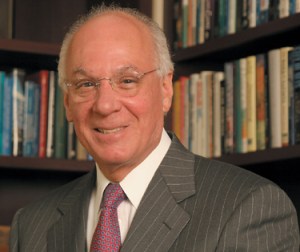
Matthew Goldstein

A couple of days ago we posted a story about how the Daily News tried to convince its readers that mayoral aide Howard Wolfson was wrong when he told NY1 that Mike Bloomberg will dictate the agenda for the 2010 NYC Charter Revision Commission.

The News was protecting commission chair Matthew Goldstein and his colleagues — who have steadfastly insisted that the commission will act independently — from potential accusations that they are dupes or liars. It also was trying to bolster public confidence that public testimony matters at the commission’s hearings. Does it? The answer is “yes, but maybe not the way you think.” Continue reading

NYC’s Economy: Charter Revision Can Help

“Wall Street Must Recover Before City Can Overcome Recession, Economists Say.”

That’s the headline over Patrick McGeehan’s NY Times article Wednesday about an interview with economists at the Federal Reserve Bank of New York. He repeated this message in a follow-up story on unemployment rates on Thursday.

What are the prospects for a Wall Street recovery? Not good, according to McGeehan’s sources at the Fed.

Quoting one of them, Fed regional economist Rae D. Rosen, McGeehan reports that “Wall Street still appears to be shrinking. The latest figures from the State Labor Department showed that the number of jobs in the city’s securities industry declined by about 2,000, or 1 percent, in February, while most other sectors were adding jobs.” Continue reading

Charter Revision: What the Mayor Really Wants

Michael Bloomberg

How does Mayor Michael Bloomberg view the goals of his 2010 charter revision commission? Celeste Katz, the new editor of the DN’s Daily Politics blog, answers this in her April 13th piece on the mayor’s changing stance on the future of the Public Advocate and the borough presidents. Katz quotes Bloomberg about the BPs:

“I for one have come to believe that the Borough Presidents really do provide value added. I don’t agree with everything everyone does but on balance the Borough Presidents provide, at a local level, working with community boards and working with the City Council people, a valuable service and whether you could do it more effectively or not, whether they should be allowed to do A, B or C, those are the details.” Continue reading

The Times Has Spoken

Anthony Crowell, John Banks, Matthew Goldstein

You can be pretty sure that Saturday’s NY Times editorial condemning this year’s abbreviated charter revision timetable got the mayor’s attention.

The editorial directly criticized Mayor Michael Bloomberg’s plan to rush charter revision in order to advance a couple of initiatives he’s especially interested in: term limits and non-partisan elections.

At first glance, these seemingly simple changes to NYC’s political process look like things voters could handle without long analysis and discussion. But political changes, even the simplest ones, can have unintended consequences. Continue reading

Press Coverage of Charter Revision Hearing

NYC Charter Revision Commission

Next-day coverage of the first public hearing of the 2010 NYC Charter Revision Commission was less than global. The most analytic piece may have appeared on silive, the news blog of the Staten Island Advance.

“Surprise sprung by Charter chair; L.I. attorney named to direct panel and Staten Island secession vet tabbed as research director,” was the silive lede. The story, by Peter N. Spencer, discussed the implications of charter chairman Matthew Goldstein’s choice of executive director Lorna B. Goodman and research director Joseph P. Viteritti for key commission staff roles. Continue reading

Charter Panel Hears Pitch for Non-partisan Elections

Carl Paladino at NYC Charter Revision Commission Hearing 4/6/10

A surprise visit by Carl Paladino, millionaire Buffalo developer and newly-announced candidate for Governor, provided some media candy at Tuesday evening’s NYC Charter Revision Commission public hearing at the CUNY Graduate Center in Manhattan. Paladino’s open disdain for New York’s partisan electoral politics brought passion to the dominant message voiced in Tuesday’s public testimony: Make NYC elections non-partisan. Continue reading

Parks Department Regulates “Expressive Matter”: The Lederman Law?

High Line image by http://www.trainjotting.com

Carol Rinzler, our contact at 250+ Friends of NYC Parks, brings to our attention new Parks & Recreation Department rules that would impose time and place restrictions on artists who wish to display their work — “expressive matter” —  “in or on any property under the jurisdiction of the Department.”

The rules support the 30-year-old private-public partnership deal the City made with the Central Park Conservancy, and subsequently with similar groups, to give them substantial control over revenue production (vending) in major parks. Such control enables them to raise funds to maintain those parks. Artists have skirted any restrictions by asserting their First Amendment rights. The proposed rules would impose limits on this.

Some of the language in the rules suggests that they are aimed specifically at Robert Lederman, an artist whose repeated attempts to display his work on the High Line Esplanade in Chelsea were met with arrest.

More on this and the message we received from 250+ Friends of NYC Parks can be found after the break. The proposed new rules and a notice of the  required April 23rd public hearing can be found here.

Update: NY1 covered this story on March 27. Here‘s the link. Continue reading

Community Boards Threatened

Image: Madison Area Technical College

Less than a year ago, Mayor Michael R. Bloomberg announced that “civic service may be the most important thing we ever do” as he launched his “NYC Service” initiative to promote volunteerism and “channel New Yorkers’ good intentions to tackle our greatest challenges, particularly those caused by the economic downturn.”

Today, he violated that commitment by authorizing a devastating budget cut to NYC’s community boards, whose almost 3,000 members constitute the city’s largest cadre of civic volunteers.

In an email to the city’s 59 boards, mayoral budget official Randolph R. Panetta announced that budget director Mark Page had ordered each community board’s budget cut by $15,542 — a droplet in the huge bucket that is the city’s $4.9 billion Fiscal Year 2011 budget shortfall, but a cut so severe at the local level that many boards will have to reduce staffs that already number only two or three employees. Continue reading

NYC’s Forgotten Borough

To most Manhattanites, Staten Island may as well be New Jersey (geographers and Staten Islanders feel the same way). Once you step off the ferry at St. George Terminal, you’re in a different world: a revolutionary war fort, mile after mile of low-rise garden apartments, Victorian frame houses on winding streets, and wooded hillsides studded with stone and brick mansions.

New Yorkers who view Staten Island only from the S.I. Expressway and the West Shore Expressway don’t see the island’s vast industrial tracts on one shore, its beautiful public beach on another, the endless strip mall that is Hylan Boulevard, and the island’s golf courses, forests, and pre-Verrazano enclaves, which still hint at their rural origins. It just ain’t the same city as high-rise Manhattan.

That’s the message that Tom Wrobleski, political editor for the Staten Island Advance, sends to the 2010 NYC Charter Revision Commission. With just one Islander on the 15-member commission, Wrobelski doubts that Staten Island’s small-town distinctiveness can be adequately considered when the commission revises NYC’s government this year. To Wrobleski, the city’s rules in Manhattan and Staten Island need to be different. And many community leaders from Brooklyn and Queens feel the same way about their own boroughs. Continue reading